



Asakusa to Tokyo Skytree: a practical one-day itinerary
Asakusa and Tokyo Skytree form one of Tokyo’s most coherent walking routes. The day moves from the temple gates and merchant streets around Sensoji to the Sumida River, Tokyo Mizumachi and an observation deck 350 or 450 metres above the city. The contrast is substantial, yet the two districts are separated by a walk of less than two kilometres.
Allow six to eight hours for the main route. Add another 90 minutes if Sumida Aquarium is included. The itinerary works best when Sensoji is visited before the largest crowds and Tokyo Skytree is reserved for afternoon or sunset. In 2026, this sequence remains more efficient than treating the attractions as unrelated stops connected by additional train journeys.
Morning in Asakusa: Kaminarimon, Nakamise and Sensoji
Begin at Kaminarimon between 8:00 and 9:00. The large red lantern marks the entrance to Nakamise, a shopping street approximately 250 metres long. Many shops open later than the temple grounds, so an early arrival provides a quieter approach and cleaner photographs of the gate.
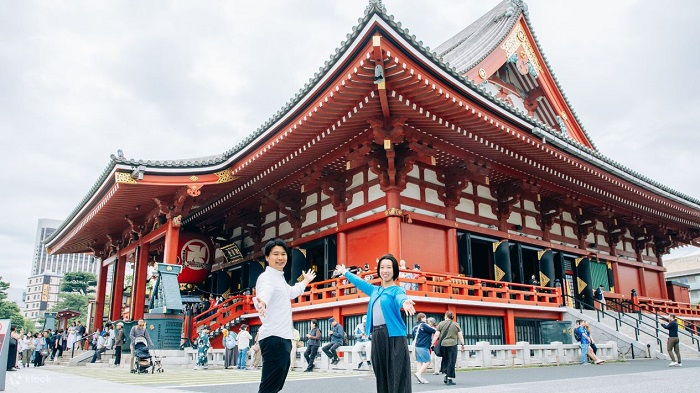
Continue through Nakamise and Hozomon Gate to the main hall of Sensoji. Founded more than 1,400 years ago, it is regarded as Tokyo’s oldest temple. Allow time for the five-storey pagoda, incense burner and nearby Asakusa Shrine rather than stopping only at the main staircase.
By the time the temple visit is complete, more Nakamise shops will be open. Browse the street on the return walk, but avoid eating while moving through dense pedestrian traffic. The smaller lanes around the temple have additional shops, cafes and restaurants with more room to stop.
The Asakusa Culture Tourist Information Center stands opposite Kaminarimon. Its upper viewing terrace is free and provides a useful perspective along Nakamise towards Sensoji. Tokyo Skytree is visible in the opposite direction, introducing the second part of the route before the river crossing.
A realistic schedule places lunch in Asakusa between 11:00 and 12:30. This leaves enough time to reach Skytree without rushing. Kappabashi Kitchenware Town is a worthwhile addition for specialist shopping, but it requires a detour west of Sensoji and should be omitted when the observation deck is booked for early afternoon.
Take the Correct Walking Route Across the Sumida River
From Kaminarimon, walk east towards Asakusa Station and the riverfront. Azuma-bashi Bridge provides a familiar view of Tokyo Skytree beside the Asahi Group buildings, but visitors planning to use Sumida River Walk should not cross Azuma-bashi.
Instead, continue a short distance north along the Asakusa side of the river to the pedestrian entrance attached to the Tobu railway bridge. Sumida River Walk crosses below the railway tracks and lands beside Tokyo Mizumachi on the eastern bank.
Tokyo Mizumachi is a low-rise commercial area built beneath the Tobu Skytree Line. Its cafes, shops and open spaces provide a useful break between the crowded streets of Asakusa and the larger Skytree Town complex. From here, the tower remains visible for the rest of the walk.
The direct journey from central Asakusa to Tokyo Skytree takes approximately 15 to 25 minutes. Allow closer to one hour if stopping for river photographs, refreshments or shops at Tokyo Mizumachi. This additional time should be considered when choosing a fixed Skytree admission period.
In heavy rain or when walking is unsuitable, take the Tobu Skytree Line from Asakusa to Tokyo Skytree Station. It is a one-stop journey. Oshiage Station also serves the tower through the Tokyo Metro Hanzomon Line, Toei Asakusa Line, Keisei Oshiage Line and Tobu services.
Time the Tokyo Skytree Visit Around the Light
For a balanced itinerary, reach Skytree Town at least 30 minutes before the reserved admission period. Early entry is not normally permitted, but any spare time can be used in Tokyo Solamachi below the tower. The public observation deck entrance is located on the fourth floor.
Standard admission covers Tembo Deck on Floors 340, 345 and 350. Floor 350 provides the principal panorama, Floor 345 contains shops and dining, and Floor 340 has the glass floor. A combination ticket adds Tembo Galleria, where a sloping corridor rises from Floor 445 towards Sorakara Point at 451.2 metres.
Tembo Deck is sufficient when the itinerary is already full or cloud may affect visibility. Tembo Galleria is better suited to clear weather and visitors who want the complete observation route. An upgrade may be available on Floor 350, but sales can be restricted during busy periods.
Current products and admission periods can be reviewed through Tokyo Skytree Tickets. Check whether the selected option includes Tembo Deck only or both observation areas, since morning, night and attraction packages can have different inclusions.
For sunset, select admission approximately 45 to 60 minutes before the published sunset time. This allows for entry, elevators and orientation while the city is still visible in daylight. Sunset varies considerably by season, so a fixed evening hour cannot be recommended for the entire year.
There is no regular time limit after admission. Re-entry is not allowed after leaving the observation area, and visitors cannot return to Tembo Galleria after descending from it. Complete the upper corridor, glass floor, cafes and shops before using the final exit elevator.
Finish the Day at Solamachi or Return to Asakusa
Tokyo Solamachi contains restaurants, speciality food shops and Japanese craft retailers, making it a practical dinner stop. Eating here avoids another journey before the evening rush. Sumida Aquarium is also located in Skytree Town, but it requires separate admission and at least 60 to 90 minutes.
If the Skytree ticket is scheduled for sunset, visit the aquarium beforehand rather than afterwards. Travellers less interested in indoor attractions can use the extra time around Oshinari Shotengai, where smaller shops and cafes preserve more of the surrounding residential district.
After a night visit, Oshiage Station provides the widest range of onward connections. Travellers returning to Asakusa can use the Tobu Skytree Line or walk back if time, weather and pedestrian access allow. Sensoji is illuminated in the evening, when the temple grounds feel markedly different from the morning visit.
The route works because its order follows the geography. Begin with Asakusa before peak congestion, cross the river on foot and enter Tokyo Skytree when the light is most useful. This produces a complete eastern Tokyo itinerary without filling the day with unnecessary station changes.
Hello!! My name is Jeanine
I love to eat, travel, and eat some more! I am married to the man of my dreams and have a beautiful little girl whose smiles can brighten anyone’s day!