



Teasel root tincture in water or juice: which option is easier to take daily
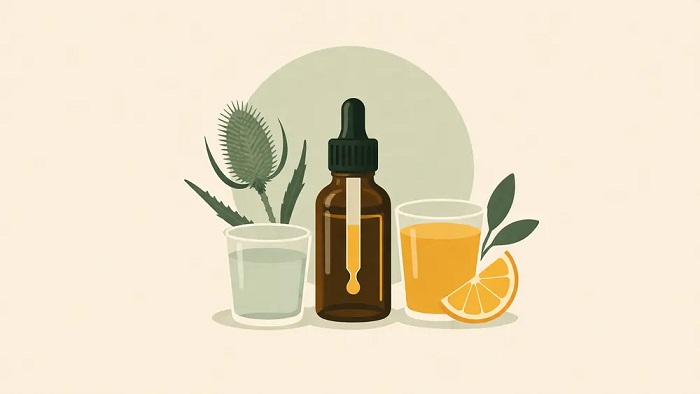
Should I dissolve teasel root tincture in water or juice? Let’s take a closer look.
Teasel Root Tincture in Water or Juice is a small question, but it matters a lot in real life. If a tincture feels too strong, too bitter, or just awkward to take every day, the problem is not the herb. The problem is the format inside your routine. Some people do fine with a few drops in water. Others find juice much easier because it softens the flavor and makes daily use more practical. This guide breaks the choice down in a simple way, with a focus on taste masking, portability, ease of use, and what usually works best for consistency.
What is the real choice between water and juice?
The choice is not only about liquid. It is about the daily experience of taking a tincture.
Water is neutral, simple, and always available. It does not add sweetness or extra flavor. Juice changes the experience. It can soften the sharp herbal note and make the tincture easier to tolerate, especially for people who are sensitive to strong plant taste.
So the real question is this: do you want the cleanest, lowest-effort option, or do you want the most taste-friendly option?
Which option is usually easier to take daily?
For most people, water is easier in terms of routine. Juice is easier in terms of taste.
If you want the fastest daily habit, water usually wins. It is simple, easy to measure into, and available almost everywhere. You do not need to think much. That matters because low-friction routines are easier to repeat.
If you dislike strong herbal taste, juice may feel easier even if it adds one more step. In practice, a routine only works if you can tolerate it. So “easier” depends on whether your main problem is inconvenience or flavor.
Why do some people prefer water?
Water keeps the routine simple
Water is the default option because it is easy. You add the tincture, drink it, and move on. There is no need to choose a flavor, open a second product, or think about pairings.
Water is more portable
At home, work, or while traveling, water is usually easier to find than juice. That makes it more routine-friendly for people with busy schedules.
Water avoids extra sweetness
Some people do not want a sweet drink every time they take a tincture. Water keeps the process neutral and minimal.
Why do some people prefer juice?
Juice can reduce the sharp herbal taste
This is the biggest reason. Tinctures often taste concentrated. Juice can make that experience softer and easier to handle.
Juice can make the routine feel less medicinal
Some people dislike the direct taste of herbal drops in water because it feels too bare. Juice can make the serving feel more like part of a normal drink.
Juice may help with consistency for taste-sensitive users
If flavor is the main reason you avoid a tincture, juice may solve the real problem. In that case, the slightly less simple option becomes the more realistic one.
Quick comparison table: teasel root tincture in water or juice
| Factor | Water | Juice |
|---|---|---|
| Routine simplicity | High | Medium |
| Taste masking | Low | High |
| Portability | High | Medium |
| Daily convenience | High | Medium to high |
| Best for taste-sensitive users | Lower | Higher |
| Best for fast routines | Higher | Lower |
How does taste change the decision?
Taste changes everything in tincture use. A tincture that looks easy on paper can become hard to stick with if the flavor feels too intense.
Water does not hide much. It dilutes the tincture, but the herbal note usually stays obvious. If you already tolerate strong botanical flavors, that may not matter. If you are taste-sensitive, it matters a lot.
Juice usually works better when the goal is flavor masking. The added taste can cover some of the sharper edges of the tincture. That does not remove the tincture completely, but it can make it much easier to take without hesitation.
This is why some people say water is more convenient, while others say juice is easier. They are solving different problems.
Does the type of daily routine matter?
Yes. Routine style matters more than people think.
Fast morning routine
If your morning is rushed, water usually fits better. It is quick, clean, and requires less planning.
Slow home routine
If you take your tincture at home and do not mind adding it to another drink, juice may fit well.
Work or travel routine
Water usually makes more sense because it is easier to access and carry as part of a simple routine.
When is water the better option?
Water is usually the better option when:
- you want the fewest possible steps;
- you already tolerate herbal flavor fairly well;
- you need something easy at work or on the go;
- you want a neutral mixer that does not add extra sweetness;
- you care more about speed than flavor masking.
For many experienced supplement users, water becomes the default because it is practical. It does not make the tincture taste better, but it keeps the process efficient.
When is juice the better option?
Juice is usually the better option when:
- you strongly dislike herbal taste;
- you have tried water and found it unpleasant;
- you want the tincture to feel easier to drink;
- you take it at home and do not mind one extra step;
- you need better taste acceptance to stay consistent.
For beginners, this can be an important point. Some people assume they should use water because it sounds simpler. Then they avoid the tincture because the taste is too strong. In that case, juice is often the more realistic daily solution.
Is one option more beginner-friendly?
Both can be beginner-friendly, but for different reasons.
Water is beginner-friendly for simplicity
If you want the easiest possible setup, water is hard to beat. It removes decisions.
Juice is beginner-friendly for taste comfort
If you are new to tinctures and worried about flavor, juice can make the first experience easier.
The best beginner option is the one you will repeat
This is the main rule. A perfect routine on paper is useless if you avoid it after two days.
What about portability and daily use outside the house?
This is where water usually takes the lead.
Water is easier at work, in the car, in a gym bag, or while traveling. Juice is possible, but it is less convenient to keep on hand every time you need it. That makes juice better for home use and water better for flexible daily use.
If you want one routine that works almost anywhere, water is usually the more portable answer.
Decision table: which option fits which person?
| User type | Better fit | Main reason |
|---|---|---|
| Dislikes strong herbal taste | Juice | Better flavor masking |
| Wants the fastest routine | Water | Less setup |
| Travels often | Water | More portable |
| Takes tincture mostly at home | Juice | Easier taste experience |
| Already tolerates tinctures well | Water | No need for extra masking |
| Skipped tinctures before because of taste | Juice | Improves daily acceptance |
Are there any practical mistakes to avoid?
Using too little liquid when taste is the problem
If the flavor feels too strong, a very small amount of water may not help enough. Some people do better with more dilution.
Choosing water just because it sounds more correct
There is no prize for making a routine harder than it needs to be. If juice helps you stay consistent, that matters.
Choosing juice when portability is your main problem
If you need something that works anywhere, juice may add friction rather than remove it.
Ignoring the product label
Always follow the product directions. Different tinctures may have different usage guidance.
What should you check before mixing a tincture into a drink?
Read the label first. Make sure the product is intended for normal oral use and check whether the serving directions suggest taking it in water or another beverage. Also review the ingredient list so you know whether the formula contains only teasel root or a blend.
If you take medications, are pregnant, breastfeeding, or have a medical condition, use a cautious approach and speak with a qualified healthcare professional before starting a new supplement. It is also sensible to avoid assuming that “natural” means “right for everyone.”
The routine question is simple, but label reading still matters.
Checklist: how to choose between water and juice
- Choose water if you want the fastest and simplest routine.
- Choose juice if strong herbal taste is your biggest problem.
- Choose water if you need portability for work or travel.
- Choose juice if you mainly take the tincture at home.
- Use more dilution if the taste still feels too sharp.
- Follow the product label before mixing with any drink.
- Pick the option you are most likely to use consistently.
What is the simplest answer for daily use?
If your main goal is routine simplicity, water is usually easier to take daily. If your main goal is making the tincture taste easier to handle, juice is usually the better option.
In other words, water wins on convenience. Juice wins on taste comfort.
FAQ
Is teasel root tincture easier to take in water or juice?
Water is usually easier for routine simplicity. Juice is usually easier for taste.
Which option hides the herbal taste better?
Juice usually hides the flavor better than water.
Which option is better for travel?
Water is usually better because it is easier to access on the go.
Can beginners start with juice instead of water?
Yes. Juice can be a practical starting option for people sensitive to strong tincture taste.
Is water the best option for everyone?
No. It is the simplest option, but not always the easiest for taste-sensitive users.
Should I always follow the label before mixing a tincture?
Yes. The product directions should guide how you use it.
What matters more: convenience or taste?
The one that affects your consistency more. The best choice is the one you will actually keep using.
Glossary
Tincture
A liquid herbal extract taken in small measured servings.
Dilution
The process of mixing a tincture with a larger amount of liquid.
Taste masking
Using another flavor to reduce the intensity of a strong herbal taste.
Serving size
The amount of product suggested for one use on the label.
Routine fit
How easily a product fits into your normal daily schedule.
Portability
How easy a product is to use away from home.
Ingredient panel
The section of the label that lists active and inactive ingredients.
Consistency
The ability to repeat a routine regularly over time.
Conclusion
For daily use, water is usually the easier choice if you care most about speed and simplicity. Juice is usually the better choice if strong herbal taste is the main reason the tincture feels hard to take.
Used Sources
General educational and merchant-style guidance that liquid herbal tinctures are commonly taken in water or juice for easier use, herbal tincture usage references — mountainroseherbs.com and similar herbal education resources
Consumer supplement context around tincture dilution, serving style, and taste masking in daily routines, general tincture use materials — botanical supplement education resources
Dietary supplement safety context supporting cautious label-first use and non-claim-based language, supplement safety references — nih.gov and ncbi.nlm.nih.gov/books
General herbal product reference context for teasel root sold in extract and tincture formats, herbal materia medica and product education sources — herbal product reference materials
Hello!! My name is Jeanine
I love to eat, travel, and eat some more! I am married to the man of my dreams and have a beautiful little girl whose smiles can brighten anyone’s day!