




Digital marketing: how it works, its advantages and basic definition
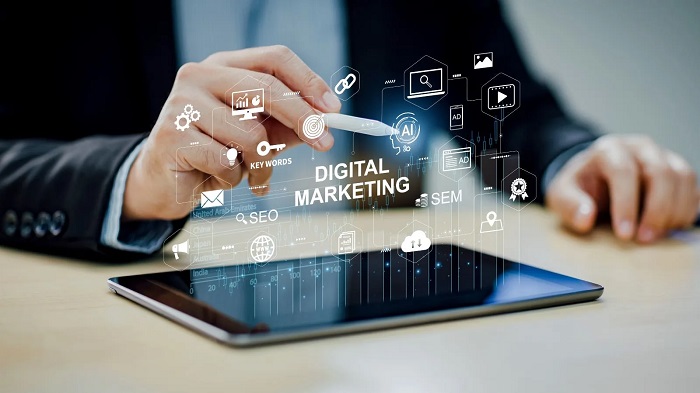
Digital marketing is a system of promoting products, services, and brands through digital channels: websites, search engines, social media, email newsletters, mobile apps, and online advertising. Unlike traditional tools, it relies on audience behavior data and allows for flexible communication management at every stage of the funnel.
Today, digital channels have become the primary decision-making environment: people compare offers, read reviews, watch video reviews, ask questions in messengers, and place orders online. Therefore, a strong brand presence in the digital environment with digital marketing company in Calgary impacts not only sales but also trust, recognition, and long-term loyalty.
Concept and Key Components of Digital Marketing
Broadly speaking, the digital approach integrates strategy, content, analytics, and technological infrastructure. This isn’t a single tool, but a set of methods that work together to attract attention, convert interest into leads, and retain customers.
Main Channels and Tools
- SEO – website optimization to increase organic traffic from search engines.
- Contextual and display advertising – paid audience acquisition based on queries and interests.
- SMM – social media promotion through content, communities, and advertising accounts.
- Email Marketing – personalized communications, warm-up, and repeat sales.
- Content Marketing – articles, videos, case studies, and guides that help the audience and build expertise.
- Web Analytics – measuring channel effectiveness and improving conversion.
- CRM and Automation – lead management, segmentation, triggers Scenarios.
How Digital Marketing Works
- Research: Market, Competitor, and Target Audience Analysis.
- Strategy: Positioning, Goals, KPIs, Channel and Budget Selection.
- Launch: Content Creation, Advertising Setup, Website and Landing Page Optimization.
- Measurement: Correctly Setting Up Goals, Events, and End-to-End Analytics.
- Optimization: A/B Testing, Improving Creatives, Offers, and the User Journey.
Defining a Digital Approach: What’s Included in Working with Online Channels?
Working with online channels is built as a managed funnel: from demand generation and reach to sales and repeat business. It’s important not to “manage channels separately,” but to fine-tune their integration: unified messages, common goals, end-to-end metrics, and coordinated touchpoints.
What is included in digital marketing in practice?
- Strategy and positioning: goals, segments, unique selling proposition, customer journey, media plan, and KPIs.
- Content and communications: content plan, creatives, texts, landing pages, email chains, chatbot scripts.
- Paid channels (performance): contextual and targeted advertising, retargeting, marketplace advertising, conversion optimization.
- Organic channels: SEO, SMM, content marketing, reputation, and review management.
- Product funnel management: CRO (conversion rate improvement), A/B tests, offers, forms, UX hypotheses.
- Analytics and measurability: web analytics, event tagging, UTM, end-to-end analytics, attribution, reporting.
- Automation and CRM: lead management, segmentation, triggered communications, integrations, LTV approach.
- Brand metrics in digital form: reach, frequency, awareness, share of voice, traffic quality control.
- Attraction – generating demand and acquiring high-quality traffic.
- Conversion – converting visits into leads/sales through landing pages and offers.
- Retention – repeat purchases, communications, loyalty programs.
- Optimization – continuous improvement based on data and tests.
Bottom line: digital marketing is not a set of disparate tools, but a managed system for working with online channels, combining content, advertising, SEO, analytics, and automation to achieve measurable business results.
Hello!! My name is Jeanine
I love to eat, travel, and eat some more! I am married to the man of my dreams and have a beautiful little girl whose smiles can brighten anyone’s day!